
Looking for the 3.6kVA solar system price in Nigeria?
BOYLS Essential costs ₦2,589,999, while Essential Plus costs ₦3,299,955.
Both include a LuxPowerTek hybrid inverter, lithium battery storage, Trina 620W solar panels, and installation.
It’s evening. The children are doing their homework, food is in the fridge, and you still have a few things to finish on your laptop.
Then the power goes off.
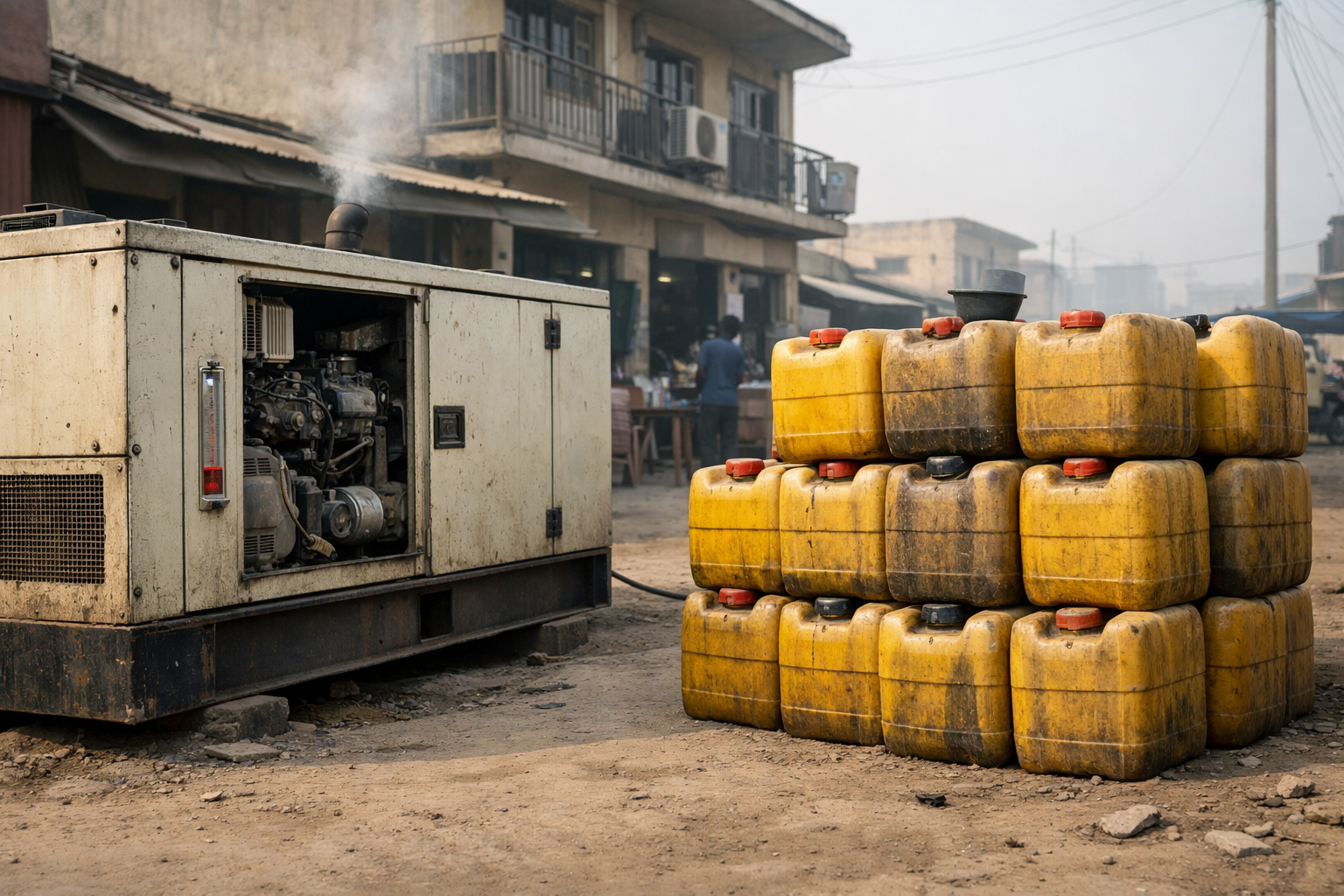
You know the routine: check the fuel, start the generator, and put up with the noise.
All this just to keep the evening going.
If you’re tired of that routine, a solar system matched to your home can help you keep the essentials running with less dependence on your generator.
Before you spend your money, though, you want clear answers. Will it carry your fridge? Can you use an air conditioner? Will the battery last until morning?
And what exactly are you paying for?
This guide walks you through our BOYLS Essential and Essential Plus solar packages, what they can power and how to choose the one that fits your home.
3.6kVA solar system price in Nigeria: compare the BOYLS packages
Our Essential package is ₦2,589,999. Our Essential Plus package is ₦3,299,955.
Both use a 3.6kVA/3.6kW LuxPowerTek hybrid inverter with a rated power factor of one, lithium battery storage, and Trina 620W solar panels. The main difference is the number of panels and the amount of energy the battery can store.
| What you get | Essential | Essential Plus |
| Package price | ₦2,589,999 | ₦3,299,955 |
| LuxPowerTek hybrid inverter | 3.6kVA / 3.6kW | 3.6kVA / 3.6kW |
| Rated inverter power factor | 1.0 | 1.0 |
| Lithium battery capacity | 5kWh | 7.5kWh |
| Trina 620W solar panels | 6 panels | 8 panels |
| Combined panel capacity | 3.72kWp | 4.96kWp |
| Installation | Included | Included |
| Delivery | Free, within agreed coverage | Free, within agreed coverage |
|
Customer support
|
One year free | One year free |
| Advertised warranty offer | 5+ years, subject to component terms | 5+ years, subject to component terms |
If you’re comparing these offers with other system sizes, our Solar Installation Cost in Nigeria 2026 guide explains what goes into a complete quotation. The prices in this article apply specifically to the two BOYLS packages above.
Ask BOYLS for my package quotation →
What would reliable essential power change in your home?
Think about the things you want to continue when the grid fails:
- Your children can keep reading under proper lighting.
- Your fans can keep bedrooms comfortable.
- Your internet and laptop can support the work you still need to finish.
- Your refrigerator can keep running as part of the appliances covered by your system.
- Your family can enjoy the television without starting a generator just for the basics.
These are the everyday needs we’ve built the offers around. Before installation, we check your appliances and the hours you need them to run.
There is also the running cost to consider.
Reuters reported petrol at approximately ₦1,400 per litre in Lagos and Abuja on 21 September 2026.
That is a dated market observation, not a fixed price at every filling station. [1]
Using ₦1,400 per litre as an example, 60 litres a month costs ₦84,000 before servicing and repairs.
Your consumption may be different, but the question is useful: how much do you spend keeping essential appliances running?
Solar can reduce the generator use that your system is designed to replace. Your actual savings depend on your fuel use, electricity tariff, household demand, and available sunshine.
What can the BOYLS 3.6kVA system power?
For many households, the starting point is lighting, fans, television, internet, laptops, phone charging, and an efficient refrigerator.
Here is an illustrative combination:
| Appliance | Example quantity | Assumed combined running power |
| 10W LED bulbs | 8 | 80W |
| 50W fans | 3 | 150W |
| Television | 1 | 100W |
| Internet router | 1 | 15W |
| Laptop | 1 | 60W |
| Phone chargers | 2 | 20W |
| Refrigerator while the compressor is running | 1 | 150W |
| Total | 575W |
These are assumed appliance values for explanation, not a guaranteed load list. Your appliance labels and measurements determine the final design.
A 575W running load is comfortably below the inverter’s 3,600W rating. However, appliances such as refrigerators can briefly draw more power when starting. Other operating modes can also increase demand.
That’s why we ask what you own and how you use it before recommending a package. You can also use our solar-sizing tool for an initial estimate, then let BOYLS check the result against your actual requirements.
Can it carry my fridge and deep freezer together?
It can be possible, provided their running power, starting demand, and combined energy consumption fit the installation.
An older freezer that runs almost continuously can place a very different demand on the battery from an efficient model that cycles on and off. Tell BOYLS the appliance models—or send photographs of their rating labels—so the recommendation reflects your home.
Can it power a 1HP or 1.5HP air conditioner?
A suitable air conditioner may fit within the inverter’s capacity. The important follow-up is how long you want it to run.
Suppose your AC averages 800W during a particular period and other appliances average 300W. Together, they use 1,100W. Eight hours would require 8.8kWh, before inverter losses.
That exceeds the usable battery energy in both packages. The inverter may be able to run the load, while the battery cannot carry that particular combination through the whole night without another power source.
For daytime or shorter AC use, the assessment may look different. Send us the AC model and desired operating hours. We will help you establish whether Essential, Essential Plus or a larger configuration fits.
Can I use an iron, kettle, microwave, or pumping machine?
These appliances need a separate load check. An iron or kettle can consume a large share of the available power, while a pump may require a substantial starting surge.
Brief use is different from continuous use. A 2,000W kettle operating for six minutes uses 0.2kWh, but still demands 2,000W while it is on.
Where suitable, scheduling a heavier appliance during productive daylight hours can reduce battery demand. It does not remove the inverter’s output limit.
How long will a 5kWh or 7.5kWh battery last?
“Will it last until morning?” is probably one of your biggest questions. The answer depends on how much electricity you use overnight.
Both packages can provide overnight backup when the battery is matched to the appliances and hours you need. Essential Plus gives you 50% more nominal battery storage, which translates to approximately 50% longer battery-only runtime under the same load and operating assumptions.
For these examples, assume a fully charged battery, 90% usable capacity, and 90% conversion efficiency, with no incoming solar or grid energy:
| Average load during the outage | Essential: 5kWh | Essential Plus: 7.5kWh |
| 300W | About 13.5 hrs | About 20.3 hrs |
| 500W | About 8.1 hrs | About 12.2 hrs |
| 800W | About 5.1 hrs | About 7.6 hrs |
| 1,000W | About 4.1 hrs | About 6.1 hrs |
Calculated estimates, not measured package performance or guaranteed backup hours. Battery settings, age, temperature, inverter standby consumption, and changing appliance loads affect actual runtime. The selected battery must support the assumed usable capacity.
If your average night load is around 500W, Essential Plus is the stronger starting point for a 12-hour backup target.
We’ll still account for the equipment’s own consumption and your actual usage before confirming the expected runtime.
If your night demand is lower, Essential may cover your required hours at the lower purchase price.
Send BOYLS my appliances and backup hours →
How much power can six or eight Trina 620W panels generate?
Your battery needs to recharge after a night of use. Meanwhile, your fridge, fans, internet, and other daytime appliances may still be running.
The Essential package gives you six Trina 620W panels, totalling 3.72kWp.
Essential Plus gives you eight, totalling 4.96kWp.
The larger panel array can collect more energy under comparable conditions, helping power daytime appliances while recharging the battery.
This is particularly relevant if you work from home or keep refrigeration running throughout the day.
For illustration, assume four equivalent peak-sun-hours and a 20% system-loss allowance.
Peak-sun-hours describe the day’s total solar energy as an equivalent number of hours at full reference sunlight; they are not simply hours of daylight.
| Package | Illustrative daily solar energy |
| Essential:3.72 × 4 × 0.80 | About 11.9kWh |
| Essential Plus:4.96 × 4 × 0.80 | About 15.9kWh |
These are planning examples, not guaranteed daily production.
Actual output depends on location, season, roof conditions, shading, equipment limits, and how much energy the system can accept and use.
Battery storage adds further losses; output may be curtailed when loads are low, and the battery is full.
More panels can help you collect more solar energy. The inverter’s 3.6kW output limit and the battery’s storage capacity stay the same.
Is Essential Plus worth the extra ₦709,956?
Essential Plus adds:
- 2.5kWh more battery storage: 7.5kWh instead of 5kWh.
- Two additional Trina 620W panels: eight instead of six.
- 1.24kWp more panel capacity: approximately 33% more than Essential.
Both packages use the same inverter rating. The upgrade buys more stored energy and more solar collection capacity.
Choose Essential at ₦2,589,999 if your priority is a well-defined set of essential appliances and the 5kWh battery fits your required backup period.
Choose Essential Plus at ₦3,299,955 if longer backup and greater daytime energy demand are important to you, while your simultaneous load still fits the 3.6kW inverter.
If you want several ACs and other heavy appliances running together, let us assess a larger system. Planning around those needs now can help you avoid an unexpected upgrade later.
Our Parkview Estate residential solar case study shows how we approached a home with much higher energy demand. It is a separate, larger installation, not an example of what these 3.6kVA packages will deliver.
Frequently asked questions about 3.6kVA solar systems in Nigeria
Still weighing your options? Here are answers to more questions Nigerian homeowners raise about solar, including concerns discussed on Nairaland and Reddit. [3] [4] [5]
Is 3.6kVA enough for a two-bedroom or three-bedroom flat?
It can be enough for the agreed essential appliances. Room count alone does not determine system size. A small flat with several ACs may consume more than a larger home using efficient lighting, fans, and refrigeration.
Will I get 24-hour electricity?
Continuous supply is possible only when the energy available across the day and night meets your demand. Neither package is an unconditional 24-hour guarantee for every home. Share your daily routine so we can check both nighttime storage and daytime replenishment.
Can the battery charge from NEPA as well as solar?
Yes. The hybrid system can be set up to charge from available grid supply as well as solar, within the equipment’s limits. We’ll explain the settings used in your installation. Our hybrid inverter guide for Nigerian homes explains how these power sources work together.
Will grid charging consume my prepaid units?
Yes. Electricity used to charge the battery passes through your meter, and charging and conversion incur losses. Solar can reduce purchased energy when it replaces grid or generator supply; a battery charged entirely from the grid does not create free electricity.
Can I keep my generator as backup?
Yes, a compatible generator can remain part of the backup arrangement. Its output quality, capacity, connection, and the inverter’s settings need to be checked. Tell us what generator you own before installation.
Do I need to rewire my entire house?
Not necessarily. The installation may require separating essential circuits from heavier loads, alongside the appropriate protection and changeover arrangement. Your existing wiring condition determines the work needed.
How long will charging take?
It depends on how empty the battery is, the power available after serving household loads and the inverter and battery charging limits. More panels can help when sunlight and equipment limits permit. Panel count alone cannot promise a fixed charging time.
Will the system be completely silent?
You avoid generator engine noise while running on solar and battery. The inverter may still produce fan noise during operation, so equipment placement should be considered.
How many years will the battery last?
Battery life depends on the exact model, temperature, charging settings, depth of discharge and usage. Ask for the battery’s written warranty and cycle-life conditions. The offer’s warranty headline should not be treated as a promise that every component has the same lifespan or coverage.
Can I add more batteries or panels later?
It may be possible, depending on the equipment’s compatibility and capacity limits. Tell us about plans before buying so we can account for them. Extra battery storage does not automatically increase the inverter’s output power.
Why is another seller’s 3.6kVA package cheaper?
The inverter rating is only one part of the comparison. Check battery capacity, panel quantity and brand, installation scope, protection, warranty, and support. Compare their complete offer with six or eight Trina 620W panels and the stated BOYLS battery capacity.
Is installation really included, and are there extra charges?
Installation is included in both advertised packages. The written quotation should identify the included work, delivery coverage, tax treatment and any property-specific work before you pay.
Can I pay in instalments?
Ask BOYLS about any payment arrangements currently available for your purchase. If a payment plan is available, we’ll explain the deposit, repayment schedule and any financing cost before you decide.
How do I order?
Send “ESSENTIAL” or “ESSENTIAL PLUS” to 08067633001 on WhatsApp, together with your location, appliance list and desired backup hours. We can then discuss suitability and your written quotation before you proceed with payment and installation arrangements.
Make your next power decision with confidence
You want your children to study, your food to stay cold, and your evening to continue when the grid goes off. The next step is choosing a package that fits those priorities and the way your family uses electricity.
BOYLS Essential — ₦2,589,999
3.6kVA/3.6kW LuxPowerTek hybrid inverter + 5kWh lithium battery + six Trina 620W panels.
BOYLS Essential Plus — ₦3,299,955
3.6kVA/3.6kW LuxPowerTek hybrid inverter + 7.5kWh lithium battery + eight Trina 620W panels.
Installation included. One year of free customer support. More solar panels at the same package prices.
I want the Essential package →
I want the Essential Plus package →
Not sure which one fits?
Send us your appliance list and the hours you need backup.
We’ll help you choose